Slab leak detection investigates whether concealed plumbing is leaking, which line is affected and where further access may be needed. For a Collierville home with unexplained water use, damp flooring or water sounds, the aim is to establish the source before choosing a repair.
Tell us what you are seeing. Start with a clear next step.
01
What detection is meant to answer
Detection should help establish whether plumbing is leaking, which line is affected and where further access or testing may be needed. Moisture entering through concrete from outside is a different problem from a leaking supply pipe.
02
How a provider may investigate
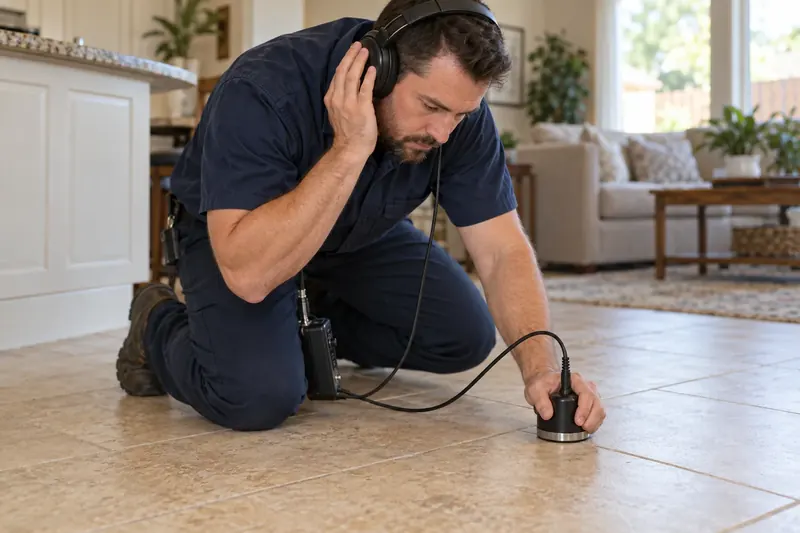
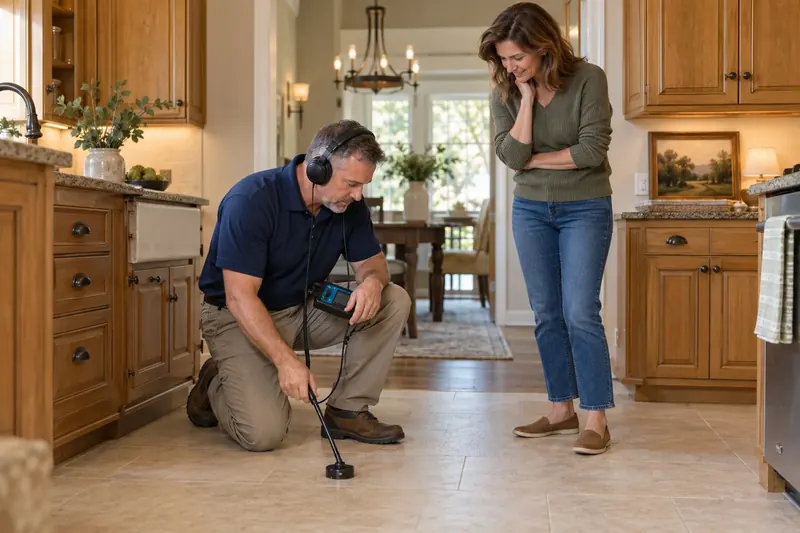
Depending on the property and suspected line, a provider may use pressure testing, acoustic listening, thermal imaging or other equipment. Not every method suits every pipe or floor. Ask what the test can confirm and what remains uncertain.
03
Prepare for the assessment
Note when the symptoms began and whether water use has changed. Keep recent water bills available, explain any previous repairs and identify accessible shutoffs if you know them. Avoid breaking into the floor to search for a leak yourself.
04
Discuss the findings before repair
Ask whether the source is confirmed, how the proposed access point was chosen and whether repair alternatives exist. A useful assessment separates the evidence for a leak from assumptions based on a damp patch.
Make the findings useful to your repair decision
What did the testing confirm?
Ask which line appears affected, how the suspected leak position was identified and whether more testing is needed. A clear explanation helps separate a confirmed plumbing leak from a moisture concern.
What access would come next?
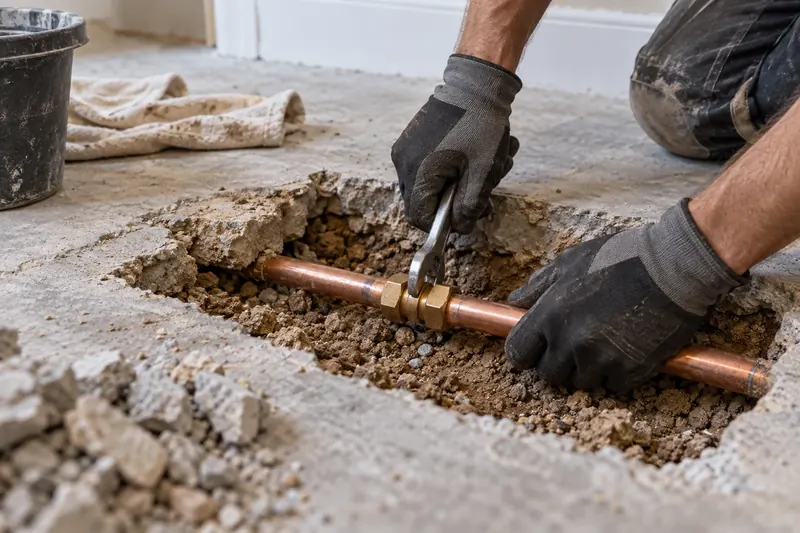
Discuss whether locating the line is enough to plan a repair or whether another inspection is needed. Ask where any opening would be made and what finishes could be affected.
What information can I keep?
Ask for the findings and proposed next step in writing. Keep those details alongside previous repair records so you can compare options without relying on memory.
A useful assessment gives you evidence and a next step
When arranging leak detection in Collierville, start with what you have observed rather than naming a repair you think is needed. Mention when the symptoms began, any earlier plumbing work and whether water is actively escaping.
Keep detection separate from repair authorization
Ask what the assessment includes, whether its findings will be explained in writing and whether additional testing might be needed. Locating a suspected line does not by itself settle the repair route, price or restoration scope. You should be able to distinguish what has been confirmed from what is still being investigated.
No. A warm patch can have other causes. Explain whether it is new, whether water use changed and whether other symptoms are present. Testing should establish whether a plumbing line is leaking.
Can detection avoid unnecessary floor openings?
Testing may help narrow the suspected location before access is planned. The method depends on the pipe, layout and conditions; it does not guarantee that no opening will be needed.
What should I ask for after testing?
Ask which line is affected, what evidence supports the finding and what remains uncertain. Discuss access and repair options separately from the detection visit.
Have your Collierville location, the main symptom and shutoff status ready. Confirm provider availability, assessment charges and the proposed scope on the call.