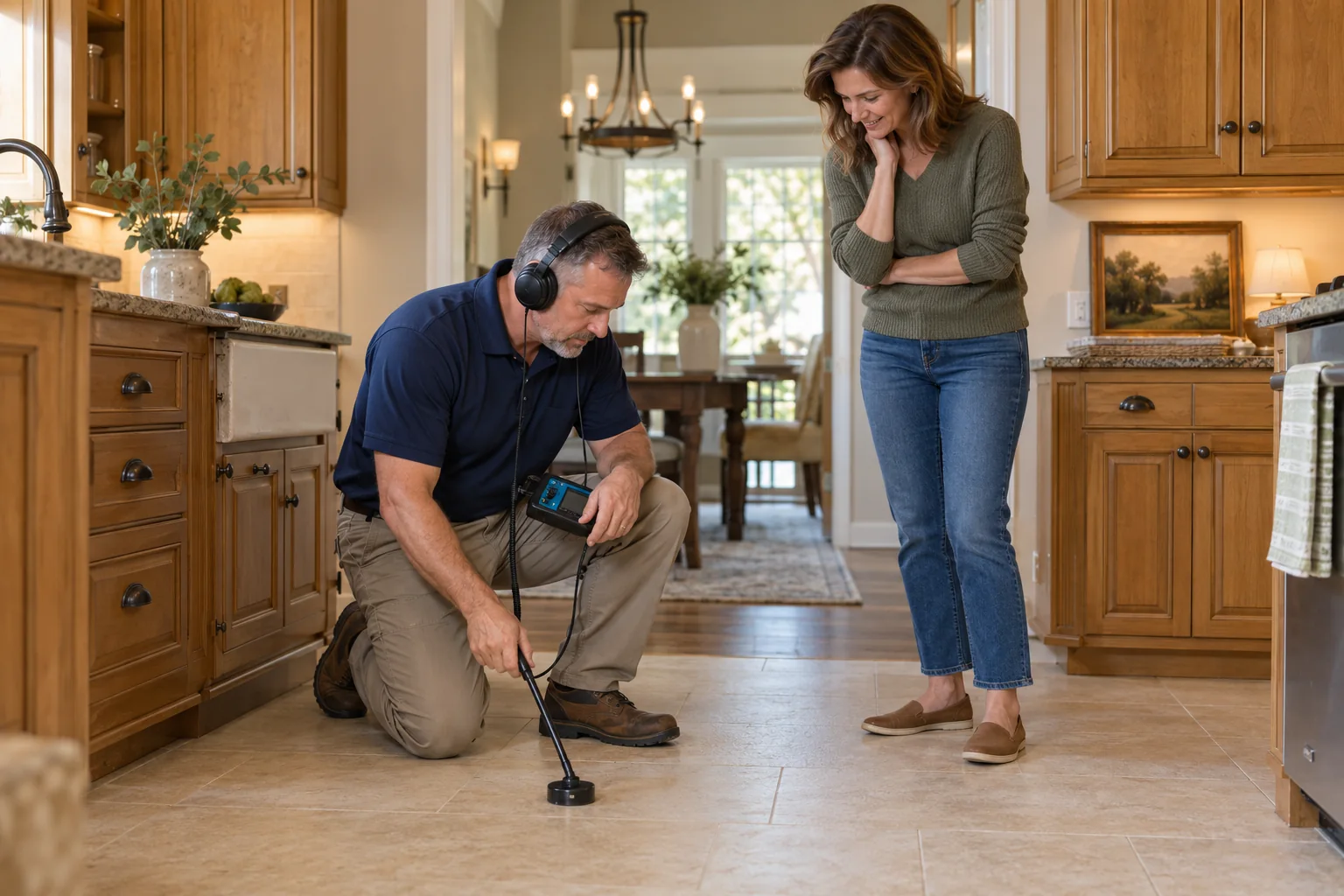
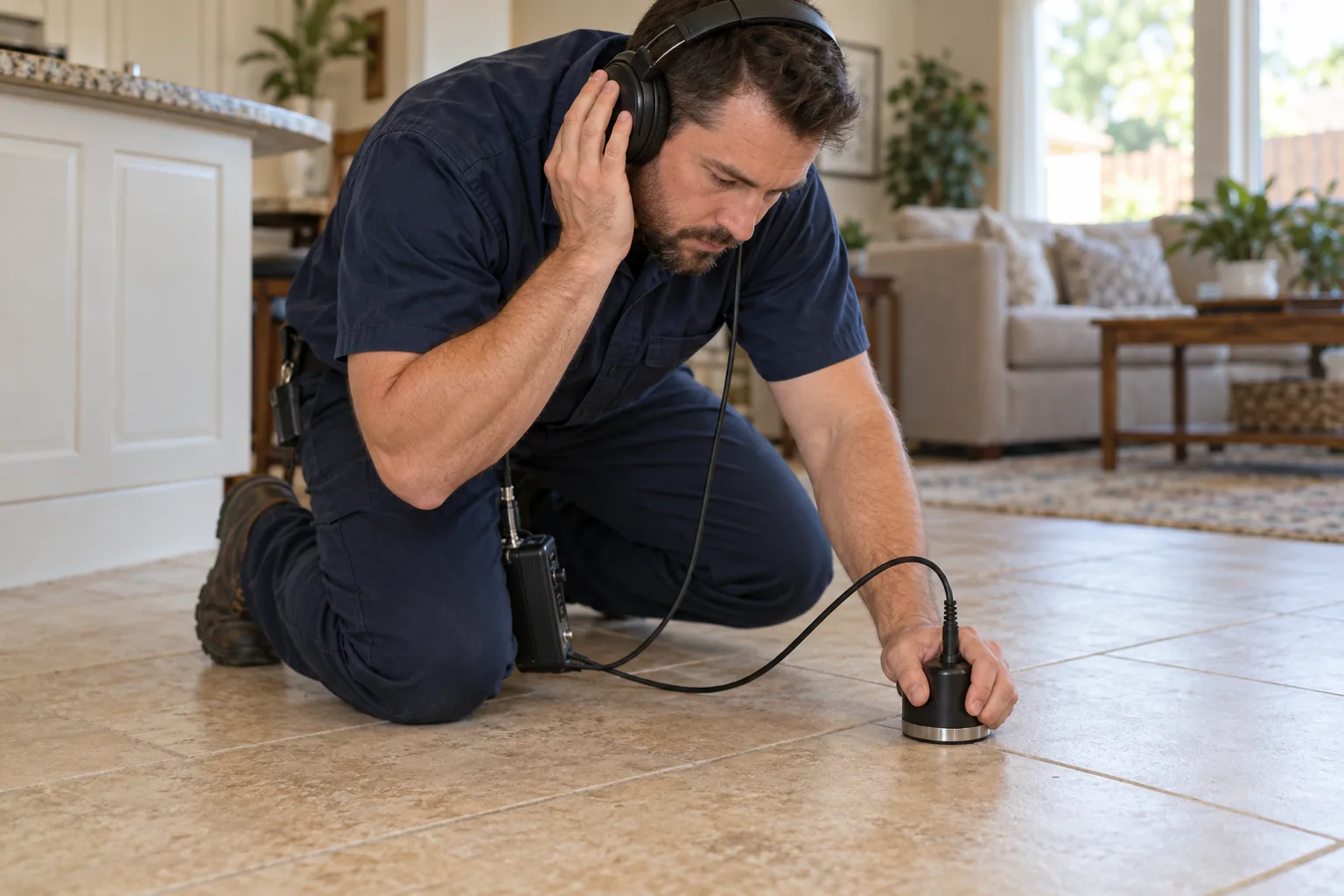
Tell us what you are seeing. Start with a clear next step.
01
Explain what is happening now
Tell the provider whether water is visibly escaping, flooring is becoming wetter or the supply has been shut off. State when the problem began and whether the leak appears inside the home or outside. Do not assume a slab leak without testing.
02
Avoid unsafe access
Keep away from wet areas near electrical equipment. Do not open a concrete floor or reach into concealed spaces to find the pipe. If you already know how to safely operate your water shutoff, doing so may help limit water loss; do not force an unfamiliar or stuck valve.
03
Clarify service timing on the call
Explain the urgency and ask the service provider about the next available assessment. Ask what timing is available and what happens before any repair work is agreed.
04
Repair and water-damage work are different
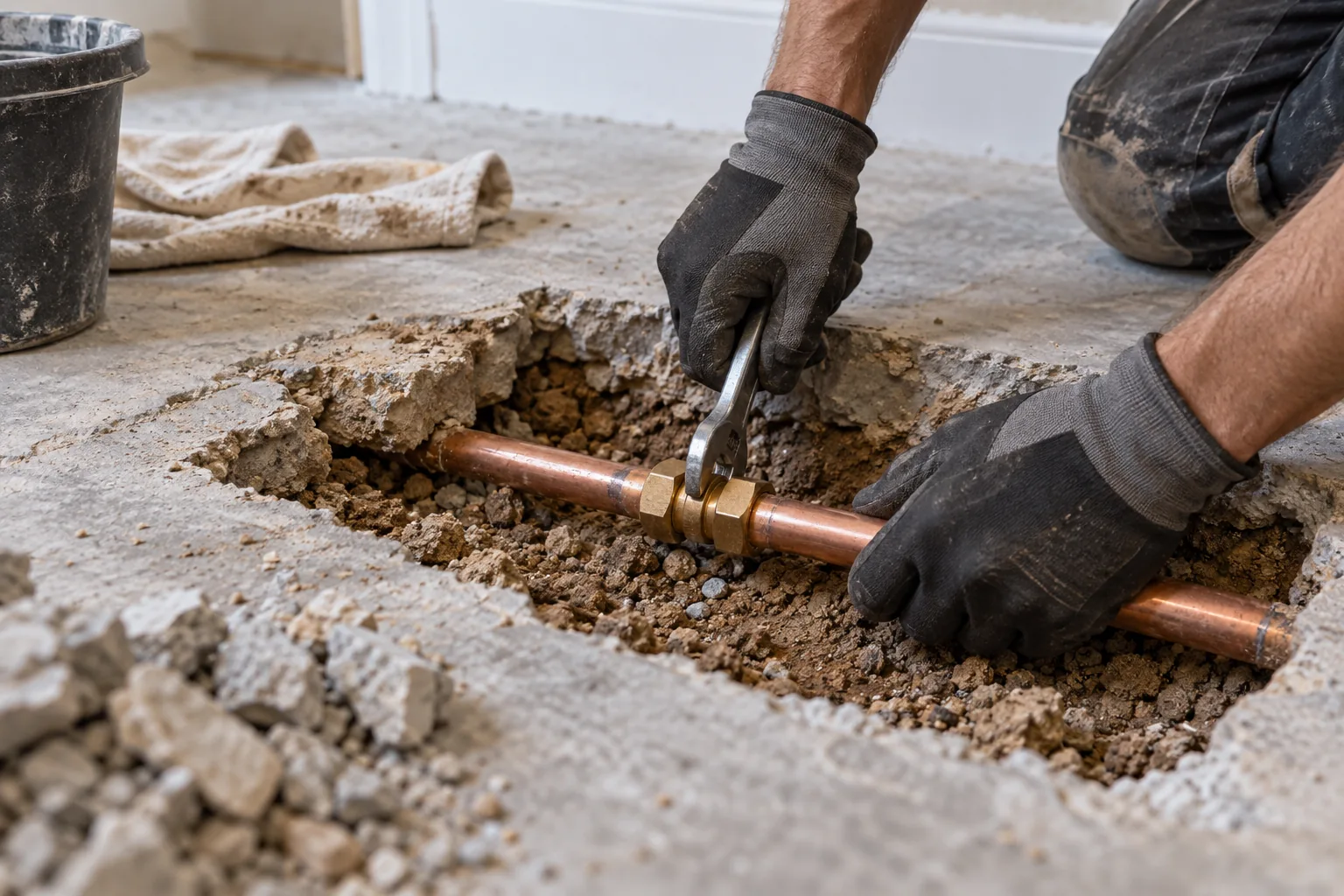
Locating and repairing the leaking plumbing may not include drying, flooring replacement or other restoration. Ask which work is included and which needs a separate professional.
Make the urgency clear when you call
Describe the change
Explain whether the damp area is spreading, water is visibly escaping or normal supply has been interrupted. Tell the call handler when you first noticed it.
Explain the shutoff status
Say whether the water is still on or has already been shut off. If you are unsure where the shutoff is, explain that rather than attempting unfamiliar access.
Ask about the next assessment
Discuss the next available appointment and what information is needed. A repair plan follows investigation of the source and the affected line.
Questions to ask on the call
Can you confirm the source before work begins?
Ask which test or evidence identifies the affected line and what remains uncertain.
What is included in the scope?
Discuss access, pipe work, testing and restoration separately so the scope is clear.
Who gives the price?
The service provider discusses pricing based on your specific property and proposed work.